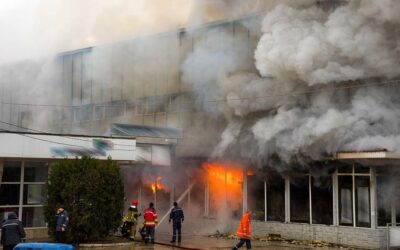
We’ve probably all the seen the videos of a turkey being lowered into a deep fryer, followed by a disastrous eruption of roaring flame.
There’s good reason the National Fire Protection Association recommends against using those deep fryers: Thanksgiving is the No. 1 Day for home cooking fires, with Christmas Day and Christmas Eve ranking second and third.
But risk of holiday fire is not limited to the home. Seasonal precautions are just as important for offices, factories, schools, warehouses, and other commercial properties.
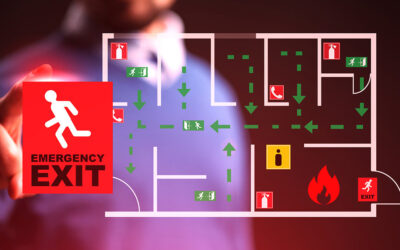
This is a good time of year to make sure fire evacuation areas and exits are unobstructed and fire escape maps are up to date, because the dangers extend beyond cooking.
Decorations, lights, candles, extra visitors and clutter, extension cords, even the company potluck can add fire risks for your building and its occupants. In addition to having a well-designed building emergency action plan, taking some sensible precautions now can help keep the holidays festive rather than tragic.
Safely keeping the season bright
Electrical problems contribute to thousands of workplace fires every year. The holiday season adds to the risk. Overused extension cords, overloaded circuits, and unattended lights all add up to a fire waiting to happen.
The National Safety Council’s holiday safety checklist provides a starting point for a policy or reminder to share with employees and other building occupants.
Precautions include:
- Check all lights, decorations and cords for damage before using
- Avoid overloading outlets, which can overheat and cause a fire
- Do not extend the length of an extension cord by connecting it to another extension cord
- Do not place extension cords in high-traffic areas, or under rugs, carpets or furniture
- Turn off all electrical decorations before leaving
Not all holiday risks are electric. Candles pose a particular hazard. In fact, December is the peak month for candle fires.
If your building allows candle flames — battery-powered versions are the safe alternative — they should never be left unattended or out of sight. Use sturdy candle holders that aren’t easily knocked over, placing the candle at least 12 inches from any combustible material. And never allow open flames in areas where oxygen tanks are used.
Keep danger off the menu
Food is a big part of every holiday, at home and work. Some commonsense precautions can keep these traditions alive while also keeping everyone safe:
- Never leave a stove or oven unattended
- Keep children away from cooking surfaces, hot food and liquids
- Keep the floor in the cooking space clear of trip hazards
- Never use water to extinguish a grease For small fires, turn off the burner and carefully smother flames with a metal lid or baking soda. If the fire risks getting out of control, use a Class ABC or Class K fire extinguisher.
When the crockpots and electric warming plates come out for company potluck, take the same care as with decorations: Do not overload circuits or extension cords. And avoid letting cords dangle off the edge of the serving area.
Chafing dishes that use canned fuel pose another risk. Like candles, canned fuel must be kept safely away from combustible materials such as napkins, decorations, or tablecloths. Never move a chafing station while the fuel is burning. And because the flame can be nearly invisible, take special care to ensure it is snuffed out when done. A Class ABC extinguisher should be kept nearby.
Safe-tree First
Christmas trees may be a mainstay of holiday decoration, but one that comes with a caution: Setting up a live tree indoors is equivalent to bringing a source of fuel for fire inside your building.
NFPA notes that even though Christmas trees are not common — fires involving candles are 38 times more frequent — they usually are serious because dried branches are so combustible. The organization offers the following safety tips:
- Test a fresh-cut tree for loose needles, a sign it may be too dry
- Cut 2 inches from the base of the trunk before placing it in the stand
- Add water daily
- Placed it least 3 feet away from any heat source
- Make sure the tree is not blocking an exit
Electrical distribution or lighting equipment are responsible for 41% of Christmas tree fires in the home, so the same precautions as with lighted decorations apply: Make sure all lights and cords are in good condition.
And if choosing an artificial tree instead, look for a “fire resistant” label.
More the merrier, more the precautions
The holidays can be hectic, with more of everything: unexpected visitors inside the building, seasonal staff working odd shifts, extra clutter in the workplace. This is where a well-designed building emergency evacuation plan, and up-to-date fire escape maps, play critical roles.
As in every other time of year, fire evacuation areas and exits must be kept unobstructed. Your team must know and follow the details of your emergency action plan, because you are responsible for the safety of everyone in your building.
That extends to seasonal workers, including those who are hired through staffing agencies. The Occupational Safety and Health Administration says: “Host employers must treat temporary workers like any other workers in terms of training and safety and health protections.”
Temporary and seasonal workers should be made familiar with fire evacuation areas and fire escape maps. Your fire escape maps must help visitors to easily find exits and to be accounted for in the event of an evacuation.
Expertise for all seasons
During the holidays and at all times of the year, an effective building emergency evacuation plan depends on up-to-date facility emergency maps. And that’s what we provide at Building Maps, where every illustrator and project manager is trained in life safety code and fire code.
This team knows how to identify primary and secondary egress routes to create accurate, up-to-date fire escape maps and other safety maps.
Our maps are made to easily guide people toward safety, in compliance with local, state and national codes. We know how to create the right map for every situation, every size and type of building, every location. Our team understands the science and design needed to create safe fire escape maps, and maps for security, severe weather, and more.
See how we can help you stay safe this holiday season and year-round. Contact us today by phone or email. Or use this simple form to tell us a little bit about your project to request a quick and free quote.